 ultimate-guide
Tips for Buying Your First Fine Art Piece in 2026
Table of Contents
- Tips for Buying Your First Fine Art Piece: Start With a Clear Plan
- How Much to Spend on Art as a First-Time Buyer
- Original Art vs. Prints: What Your Budget Actually Buys
- Questions to Ask When Buying Art From a Gallery
- Buying Art Online Without Getting Burned
- Mistakes That Trip Up First-Time Buyers
- Conclusion: Your First Piece Is a Decision, Not a Gamble
- Frequently Asked Questions
Last Updated: October 19, 2026
Tips for Buying Your First Fine Art Piece: Start With a Clear Plan
Buying fine art for the first time rewards preparation over impulse. At Miramontes Gallery, we have watched first-time buyers succeed when they define their goal before they browse, and struggle when they shop by mood alone. The single most useful habit is to write down what you want the piece to do: anchor a room, start a collection, or mark an occasion. That one sentence narrows thousands of options to a manageable shortlist and keeps emotion from outrunning judgment.
A clear plan also protects your budget. Decide the ceiling before you fall for something, not after. Set aside a small reserve for framing, shipping, and insurance, since those costs sit outside the artwork's price. Buyers who plan tend to feel confident about their purchase a year later. Buyers who improvise often wonder what they were thinking.
Define What You Actually Want to Live With
The best first purchase is one you can describe in three words before you see it. "Calm, abstract, blue" or "bold, figurative, warm" gives you a filter. Without it, every gallery and every website looks equally appealing, and you end up choosing whatever you saw last.
Ask yourself three practical questions:
- Where will the piece hang, and what size fits that wall?
- What mood should the room carry when the piece is in it?
- Will you keep this for a decade, or is it a stepping stone?
Size is the question first-time buyers skip most often. Measure the wall, tape out the dimensions on the floor or wall with painter's tape, and stand back. A piece that looks modest in a gallery can overwhelm a small room, and a small work can vanish on a large wall.
How Much to Spend on Art as a First-Time Buyer
There is no universal number, and anyone who quotes you one is guessing. A common approach is to treat your first purchase as a fixed, comfortable amount you could lose without disrupting your finances, then shop strictly within it. Many first-time buyers find that setting a ceiling in advance makes the decision calmer and the negotiation simpler.
Budget for more than the sticker. Framing, shipping, sales tax, and insurance all add to the total, and a piece bought at the top of your range can leave nothing for the frame it needs. Keep a reserve.
Think in terms of what the money buys. A modest original by an emerging artist often delivers more long-term satisfaction than a large reproduction of a famous image. The original is a one-of-a-kind object with a story; the reproduction is decor. Neither is wrong, but they serve different purposes, and your budget should follow your purpose.
Original Art vs. Prints: What Your Budget Actually Buys
An original is a unique work made by the artist's hand; a print is a reproduction produced in multiples. That distinction drives everything else: price, resale potential, and the emotional weight of ownership.
| Attribute | Original Work | Print or Reproduction |
|---|---|---|
| Uniqueness | One of a kind | Produced in an edition or open run |
| Price level | Higher, varies widely | Lower and more predictable |
| Resale potential | Depends on the artist's career | Limited for open editions |
| Care and framing | Often needs custom framing | Frequently sold framed |
| Best for | Collectors building a legacy | Decorating on a set budget |
Limited-edition prints sit in between. They are produced in a stated number, often signed and numbered by the artist, and they cost less than an original while retaining a degree of scarcity. Open-edition reproductions are the most affordable and the least collectible.
For a first purchase, we recommend deciding which of these two goals matters more: owning something no one else has, or filling a wall beautifully for less. Answer that honestly and the original-versus-print question answers itself.
Questions to Ask When Buying Art From a Gallery
Ask about the artist, the medium, the condition, and the terms of sale, in that order. A reputable gallery welcomes these questions and answers them plainly. Hesitation or vagueness is itself information.
Bring a short list:
- Who is the artist, and what is their background and exhibition history?
- What materials were used, and how should the piece be cared for?
- Is this an original, a limited edition, or an open reproduction?
- What are the return, shipping, and insurance terms?
- Is a certificate of authenticity provided?
Write the answers down. Memory is unreliable in a gallery, and a written record helps you compare candidates later.
Questions About Authenticity and Provenance
Provenance is the documented history of a work's ownership, and it is your best protection against misrepresentation. Ask for the chain: where the piece has been, who has owned it, and what paperwork supports that history. For contemporary work bought directly from the artist or their representing gallery, the paper trail is usually short and clear.
Request a certificate of authenticity in writing, signed by the artist or gallery, describing the work, its medium, dimensions, and edition where relevant. Keep it with your purchase records. If you later insure, resell, or donate the piece, that document matters.
Buying Art Online Without Getting Burned
Online buying removes the gallery visit, so you replace physical inspection with verification. Check that the site uses secure, encrypted checkout before you enter payment details, read the return and replacement policy in full, and confirm how the work will be packed and shipped. A seller who is clear about these terms is usually clear about everything else.
Color is the classic online complaint. Screens render color differently, and a piece that looks warm on a monitor can read cool on your wall. This is where preview tools earn their place. Miramontes Gallery offers augmented reality previews that let you see a piece on your own wall, at scale, before you commit, which closes much of the gap between screen and room.
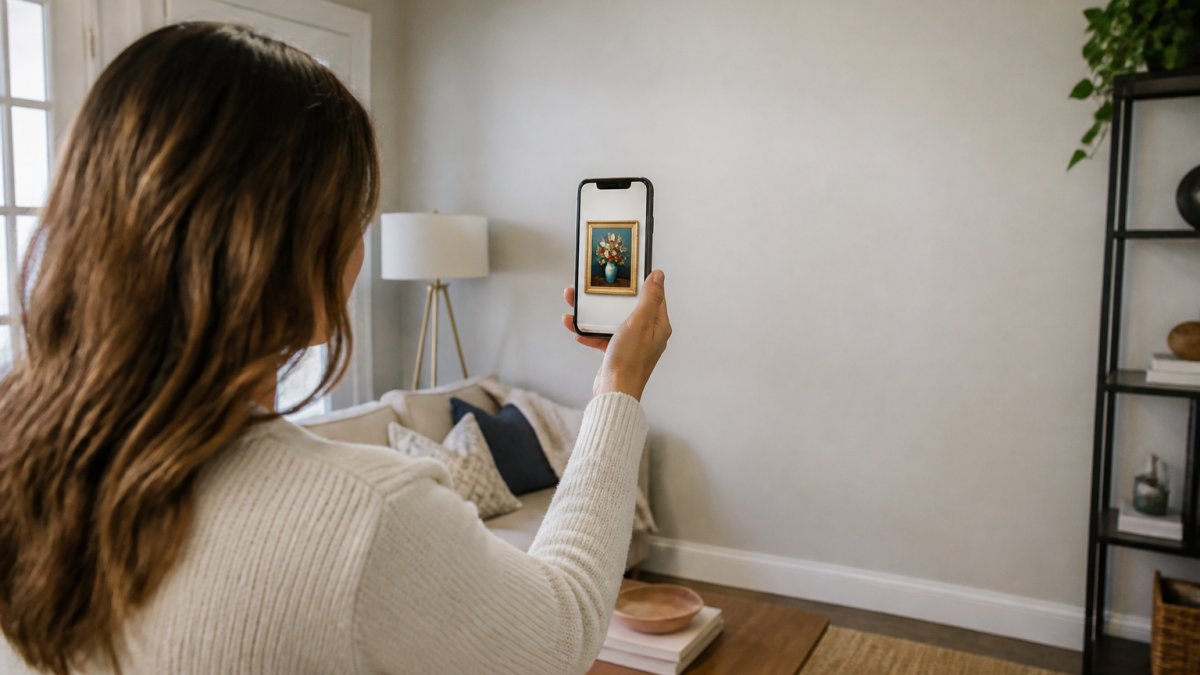
Ask how damage is handled, too. Miramontes Gallery offers no-charge replacement or refund for quality issues, and the checkout runs on SSL encryption. Confirm the timeline for any replacement before you buy, and keep the original packaging until the piece is hung and you are satisfied.
Mistakes That Trip Up First-Time Buyers
The same errors recur, and each is avoidable with a little discipline.
- Shopping without a budget. Decide the ceiling first, then browse.
- Ignoring scale. Tape the dimensions on your wall before you commit.
- Skipping the paperwork. Always get a certificate of authenticity and keep it.
- Buying for trend rather than for the room. Trends fade; your wall stays.
- Forgetting the extras. Framing, shipping, and insurance are part of the cost.
- Rushing the decision. A day's reflection rarely costs you the piece and often saves you a regret.
A common mistake is treating the first purchase as a test of taste you must pass. It is not. It is the opening move in a collection, and collections grow by learning what you actually enjoy living with.
Conclusion: Your First Piece Is a Decision, Not a Gamble
The buyers who end up happiest are the ones who planned, asked hard questions, and bought within their means. Buying fine art gets easier once you treat it as a considered decision rather than a leap of faith. Miramontes Gallery supports that decision with augmented reality previews, SSL-encrypted checkout, and a clear policy of no-charge replacement or refund for quality issues.
Start with your wall, your budget, and your three words. Then shop art with confidence, knowing you can see it in your space before it arrives.
Frequently Asked Questions
How do I choose my first piece of fine art?
Start with the wall you plan to fill and the room's lighting, then pick a medium and size that fit it. Look at a range of paintings and photography before deciding, and note which pieces you return to. Buy something you want to see every day rather than something that matches a trend. If you are buying fine art online, use a preview tool to check scale and color in your actual space before you commit.
How much should I spend on my first piece of art?
There is no fixed number. A common approach is to set a total budget you can spend without stress and treat your first purchase as a learning step rather than a centerpiece. Factor in framing, shipping, and insurance, which add to the sticker price. Ask the gallery directly what is included. Spending decisions should reflect your income and comfort level, not a percentage rule pulled from someone else's collection.
Is it better to buy original art or a print?
Originals are one-of-a-kind works, usually signed by the artist, and they hold value differently than reproductions. Prints are made in editions and cost less, which makes them a reasonable entry point. If your goal is a lasting collection, an original painting or photograph gives you something no one else owns. If you are testing what you like, a print lets you learn your taste with less financial exposure.
How can I tell if a piece of art is authentic?
Ask for documentation: a certificate of authenticity, the artist's signature, edition numbering on prints, and any provenance records showing prior ownership. A reputable gallery will answer these questions without hesitation. For online purchases, confirm the seller's registration and track record, check that checkout is SSL-encrypted, and read the return policy before paying. If a seller dodges questions about paperwork, walk away.
What questions should I ask before buying art?
Ask about the artist's background and exhibition history, the materials used and how they age, whether the price includes framing and shipping, and what the return policy covers. Ask for condition reports on any existing work and for the certificate of authenticity. Also ask how the piece should be hung and lit. A gallery that answers clearly and in writing is a safer partner than one that only sends a price.
Can I return a piece of art if I buy it online?
That depends entirely on the seller's policy, so read it before checkout. Look for terms covering damage in transit, color mismatch, and change of mind, and note the window for filing a claim. Some galleries offer no-charge replacement for quality issues. Photograph the packaging before opening and keep the original crate, since most carriers require it for a damage claim.