 ultimate-guide
Buying Fine Art Online: What to Know Before You Buy
Table of Contents
- Why Buying Fine Art Online Demands a Different Approach
- How to Verify Art Authenticity Before You Pay
- An Original Art Pricing Guide: What Actually Drives Cost
- How an Augmented Reality Art Preview Changes the Decision
- Sizing, Scale, and Measuring Your Space Correctly
- What a Fair Online Art Gallery Return Policy Should Include
- Shipping, Insurance, Damage Claims, and Buying Internationally
- Evaluating Sellers, Artists, and Secure Checkout
- Frequently Asked Questions
Last Updated: October 21, 2026
Why Buying Fine Art Online Demands a Different Approach
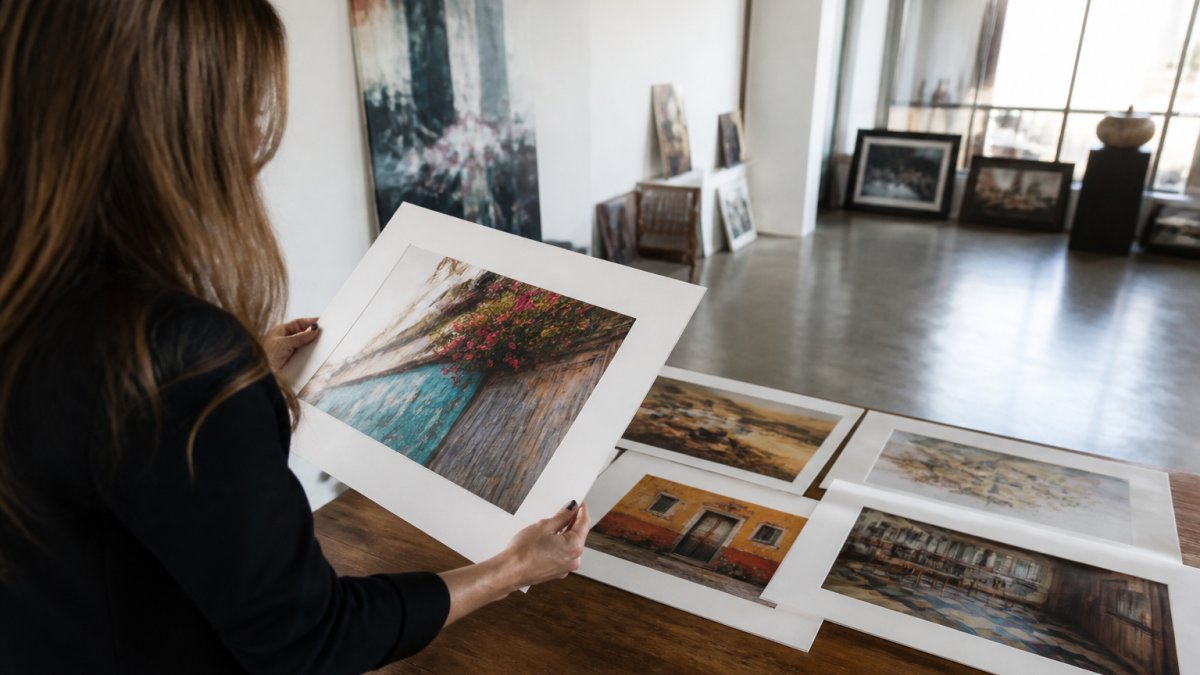
Buying fine art online means acquiring original paintings, photography, and limited-edition prints from a seller's website or marketplace without seeing the work in person.
Due diligence means judging whether the file matches the object that ships, whether the seller will stand behind it, and whether the paperwork survives a future appraisal.
Most first-time buyers focus on the image and skip the four things that protect them: provenance, condition, return terms, and total cost.
How to Verify Art Authenticity Before You Pay
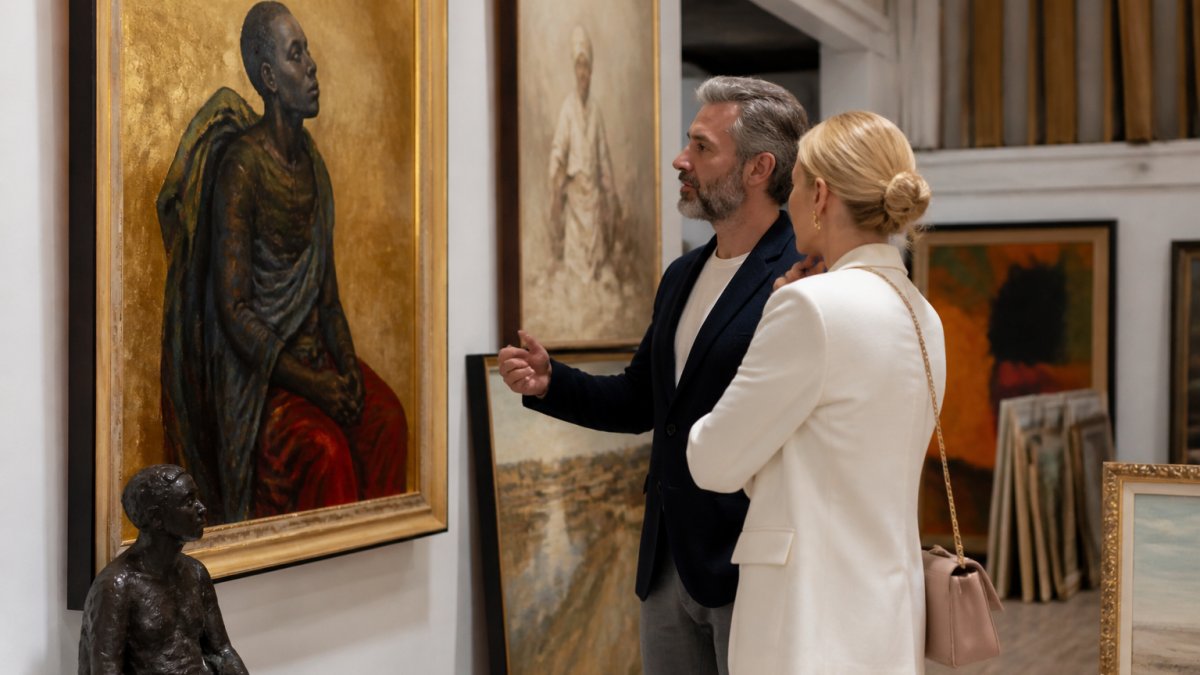
Authenticity verification means confirming a work was made by the credited artist, at the time claimed, with a documented chain of ownership. Ask for documentation before a discount, and treat every document as a claim to check.
A legitimate seller should provide the artist signature location, edition size for prints, and a certificate of authenticity naming the work, artist, medium, and dimensions.
Read the certificate for what it actually certifies
Certificates of authenticity are not standardized in the United States, and no federal statute governs their content, so the document is only as strong as its issuer. Read for four things:
- Who issued it. A certificate issued by the artist or the artist's estate carries more weight than one issued by the selling gallery, and one issued by an unrelated third party carries the least unless that party is a recognized authenticator.
- What it names. A useful certificate identifies the work, artist, medium, dimensions, year of creation, and edition size where applicable. A certificate that says only "original artwork" is decorative.
- Whether it is transferable. Some certificates are tied to the original buyer; ask whether the document travels with the work if you resell.
Understand edition numbering before you buy a print
For limited-edition prints, the edition is the core of the value. A print marked "12/50" means it is the twelfth impression in a run of fifty. Ask these questions:
- Is the edition size fixed and documented, or can the artist print more later? An "open edition" has no scarcity value regardless of how it is marketed.
- Are there artist's proofs, printer's proofs, or a separate signed edition outside the numbered run? These are legitimate but should be disclosed.
- Is the print hand-signed or plate-signed? A signature printed into the image is not the same as a pencil signature added by hand.
Verify provenance through independent records
Provenance is the ownership history, and buyers most often skip it. Ask for prior owners, galleries, or auction records, then verify independently:
- Search the artist's name against auction result databases and gallery archives to see whether the work or similar works appear.
- Look for the artist in museum collection databases and exhibition catalogs.
- Ask whether the work has been included in a catalogue raisonné, the definitive catalog of an artist's work, if one exists.
A provenance chain with gaps is not automatically disqualifying, especially for works that passed through private hands, but unexplained gaps should lower your confidence and your offer.
The Authenticity and Provenance Checklist
Use this list before any payment clears:
- Artist signature present, with location documented
- Edition number and total edition size stated for prints
- Certificate of authenticity names work, artist, medium, dimensions, year
If a seller cannot supply at least the first three, treat the listing as unverified regardless of how polished the site looks. Resistance to providing documentation before payment is itself information.
An Original Art Pricing Guide: What Actually Drives Cost
Original art pricing reflects the artist's exhibition record, medium, size, edition size for prints, and gallery overhead, not a fixed rate per square inch.
Ask sellers to explain pricing rather than quote it. A gallery that can walk you through the artist's biography, recent exhibitions, and why a piece is priced where it is has done the work; one that cannot is often marking up an unvetted resale.
The line items that turn a sticker price into a real budget
The number on the listing is rarely the number you pay. Build your budget from these components:
- Artwork price. The listed figure. Confirm whether it includes the frame and whether sales tax is added at checkout or collected later.
- Sales tax. In the United States, sales tax on art depends on your state and whether the seller has nexus there. Many marketplaces collect it at checkout; some do not, meaning you may owe use tax on your return. Ask whether tax is included in the quoted total.
- Framing and mounting. Conservation framing for a large piece can rival a meaningful share of the artwork cost, and archival materials are not optional if you want the work to hold its condition. Ask whether the piece ships framed, unframed, or stretched, since each changes cost and transit risk.
- Shipping and crating. Oversized works often require custom crates, and freight shipping is priced by dimension and weight, not by a flat rate. Request a written shipping quote before you commit.
- Transit insurance. Confirm the declared value and who holds the policy. A quote that excludes insurance is not a comparable quote.
- Customs duties and import taxes. If the work crosses a border, duties and brokerage fees can add meaningfully to the total, and they are usually collected on delivery rather than at checkout.
- Installation. Hanging a large or heavy work may require a professional installer, and specialty hardware for plaster, brick, or steel stud walls adds cost.
How to compare two listings on equal terms
Because sellers quote differently, the only fair comparison is landed cost. For each candidate work, add the artwork price, tax, framing, shipping, insurance, and duties. A lower-listed piece can cost more once crating and freight are included, and a higher-listed piece can be the better value if framing and insured shipping are included.
Ask every seller the same five questions so the answers line up:
- Is sales tax included in the quoted total, and at what rate?
- Does the price include framing, and if not, what does framing cost through you?
- What is the shipping method, and is it insured at full declared value?
A seller who answers all five in writing is giving you a budget you can actually plan around. A seller who answers vaguely is transferring the cost risk to you.
Price is not the same as value
A higher price is not proof of quality, and a lower price is not proof of a bargain. Signals that justify a price are documented: exhibition history, gallery representation, public or corporate collections, and a stable edition size for prints. Be cautious of undocumented claims, pressure to buy before seeing the condition report, and prices that move without explanation.
How an Augmented Reality Art Preview Changes the Decision
An augmented reality art preview overlays a true-scale image of the artwork onto your wall through a phone or tablet camera, so you can judge size and placement before purchase.
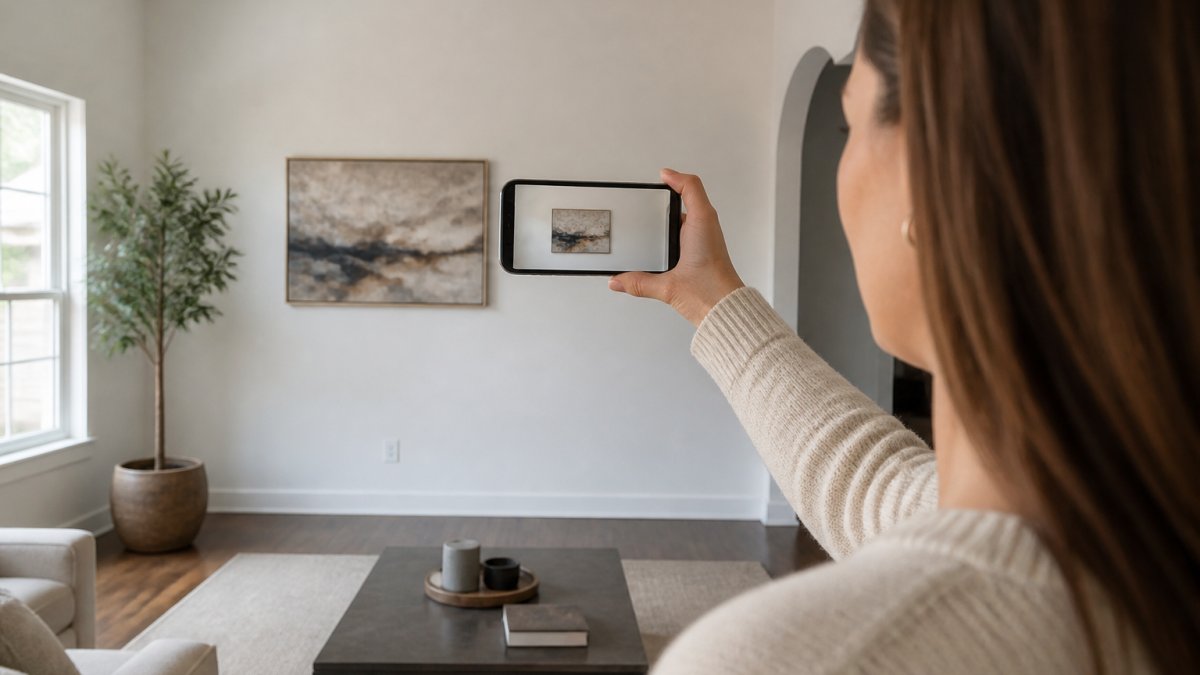
The tool does not fix color accuracy. Screens vary, and ambient light shifts how a painting reads. What AR does well is answer the scale question, which buyers get wrong most often.
Sizing, Scale, and Measuring Your Space Correctly
Measure the wall, not the furniture. A painting above a sofa should generally span a good portion of the sofa's width, and a piece over a console or fireplace needs breathing room on both sides.
Check ceiling height and the sightline from where people actually stand; a work hung too high reads as smaller than it is. For commercial space, measure the wall at the distance clients will view it from, since a piece that fills a residential hallway can disappear in a lobby.
What a Fair Online Art Gallery Return Policy Should Include
A fair online art gallery return policy states the return window in days, who pays return shipping, the condition the work must be in, and how quality issues are handled separately from change-of-mind returns.
Look for a policy that distinguishes a quality problem, such as transit damage or an undisclosed defect, from a simple change of mind.
At Miramontes Gallery, our return policy includes no-charge replacement or refund for quality issues, and we publish it in full so you can read the terms before checkout rather than after.
Shipping, Insurance, Damage Claims, and Buying Internationally
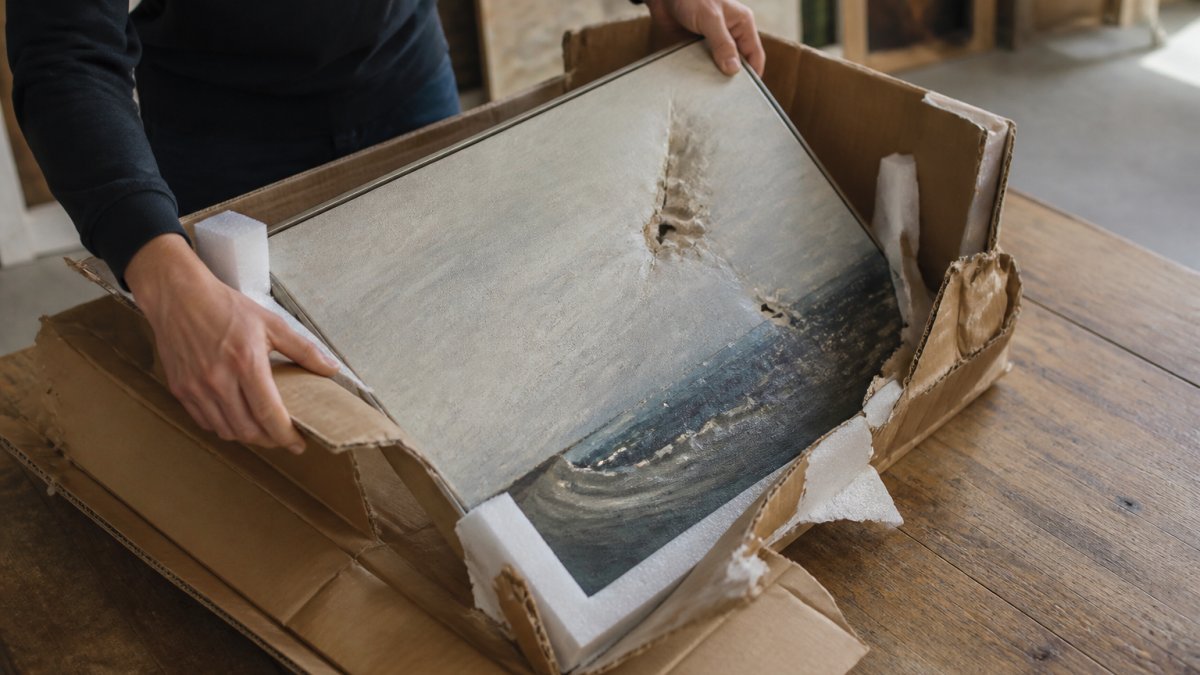
Art ships in crates, not envelopes, and handling matters as much as the carrier. Confirm the packaging method, whether the work is insured at full declared value, and the claims process if the crate arrives damaged.
Buying internationally adds customs duties, import taxes, and sometimes a broker fee. Ask who handles the customs paperwork and whether duties are collected at checkout or on delivery.
Evaluating Sellers, Artists, and Secure Checkout
Seller reputation is built on track record, transparent terms, and a checkout that protects your payment details.
Evaluate the artist separately from the seller. Read the biography, look for an MFA or BFA where relevant, and check exhibition history.
Miramontes Gallery is registered with the Art Storefronts Organization and operates a verified secure website with SSL-encrypted checkout, so the payment and terms side of the transaction is documented before you buy.
| What to check | Where to find it | Why it matters |
|---|---|---|
| Certificate of authenticity | Product page or on request | Confirms artist, medium, dimensions |
| Edition number | Print listings | Establishes scarcity and value |
| Condition report | Ask the seller | Discloses repairs or fading |
| Return window | Policy page | Protects against disappointment |
| Shipping insurance | Quote or checkout | Covers transit damage |
| SSL encryption | Checkout page | Protects payment details |
Frequently Asked Questions
How can you tell if fine art sold online is authentic?
Ask for documentation before you pay: a certificate of authenticity, the artist signature and edition number on prints, and a provenance record showing prior owners or the gallery's direct relationship with the artist. Compare the listing's dimensions and medium against the artist biography. For limited editions, confirm the edition size and that the number falls within it. A seller who answers these questions in writing, and who stands behind the work with a stated replacement policy, is a safer bet than one who only offers photos and a checkout button.
What should an online art gallery return policy include?
Look for four things: a clear return window stated in days, who pays return shipping, how quality issues like damage or a misdescribed piece are handled, and the timeline for a refund or replacement. Policies that exclude original commissions or custom framing should say so up front. Read the fine print on what counts as a quality issue, since color variation under different lighting is often excluded. Save the policy page and your order confirmation, and photograph the packaging before opening if the crate looks damaged.
How do you choose the right size artwork for your space?
Measure the wall first, then work to a ratio: artwork should cover roughly 60 to 75 percent of the width of the furniture below it, and hang the center around 57 to 60 inches from the floor. For a large wall, a single statement piece beats a cluster of small ones. Note the artwork dimensions in the listing, including any frame, and tape the outline on the wall to test the scale. An augmented reality art preview lets you see the piece at true size in your own room before you commit.
What affects the price of a piece of fine art?
Price reflects the artist's exhibition history and training, the medium and labor involved, the size of the work, whether it is an original or a limited edition print, and the gallery's costs for framing, photography, and shipping. Resale value is a separate question and should not be assumed. Compare prices for works of similar size and medium by the same artist, and ask the seller what is included, such as framing or a certificate of authenticity, so you are comparing like with like rather than sticker price alone.
How do you know whether an online art gallery is trustworthy?
Check for an SSL-encrypted checkout, a named business with a track record, published contact details, and membership in a recognized organization such as the Art Storefronts Organization. Read the return policy and the shipping terms before buying, and look for real customer feedback rather than testimonials alone. A gallery that answers questions about provenance, condition, and framing in writing is showing you how it will behave if something goes wrong after delivery.
What happens if a painting arrives damaged?
Photograph the crate and the artwork before you unpack fully, keep all packaging, and report the damage to the seller within the window stated in their policy, often 48 to 72 hours. Most reputable galleries file the insurance claim and arrange a replacement or refund rather than making you chase the carrier. Ask about the replacement timeline in writing before you buy, since a hand-embellished or commissioned piece may take longer to reproduce than a stocked print.
Buying fine art online rewards the buyer who asks for documentation before falling for an image. The work is in the questions, not the browsing. If you want a seller who publishes the terms, encrypts the checkout, and lets you preview a piece on your own wall at true scale before you commit, Miramontes Gallery is built for exactly that. Browse the collection and use the augmented reality preview to see how a piece sits in your space before you decide.