 listicle
Benefits of Buying Curated Art: 7 Reasons to Start
Table of Contents
- What Does Curated Art Mean and Why It Matters
- 7 Benefits of Buying Curated Art for Your Home and Collection
- How to Choose Art for Your Home: A Practical Checklist
- Art Collecting for Beginners: Where to Start
- Buying Art for Investment or Pleasure: Setting Realistic Expectations
- Original Art vs. Prints: What Curated Buyers Should Know
- Transparent Pricing and Total Cost of Curated Art
- Frequently Asked Questions
Last Updated: October 16, 2026
What Does Curated Art Mean and Why It Matters
Curated art is artwork selected by a knowledgeable gallery or curator who matches each piece to a collector's taste, space, and budget, rather than an endless marketplace feed you scroll alone. That distinction shapes everything about how you buy.
Curation replaces guesswork with guidance.
The art market rewards that guidance. According to Art Basel and UBS Survey of Global Collecting, collectors increasingly buy through galleries and advisors rather than open marketplaces, citing trust and expertise as deciding factors. For a first purchase especially, that trust matters more than selection size.
Below, we break down seven concrete benefits of buying curated art, plus a checklist, a beginner's roadmap, and honest notes on cost and investment risk.
7 Benefits of Buying Curated Art for Your Home and Collection
Each benefit below answers a real question buyers ask us before their first purchase. We have grouped them from the most immediate (how a room looks) to the most long-term (how a collection grows).
Aesthetic Value and Visual Impact
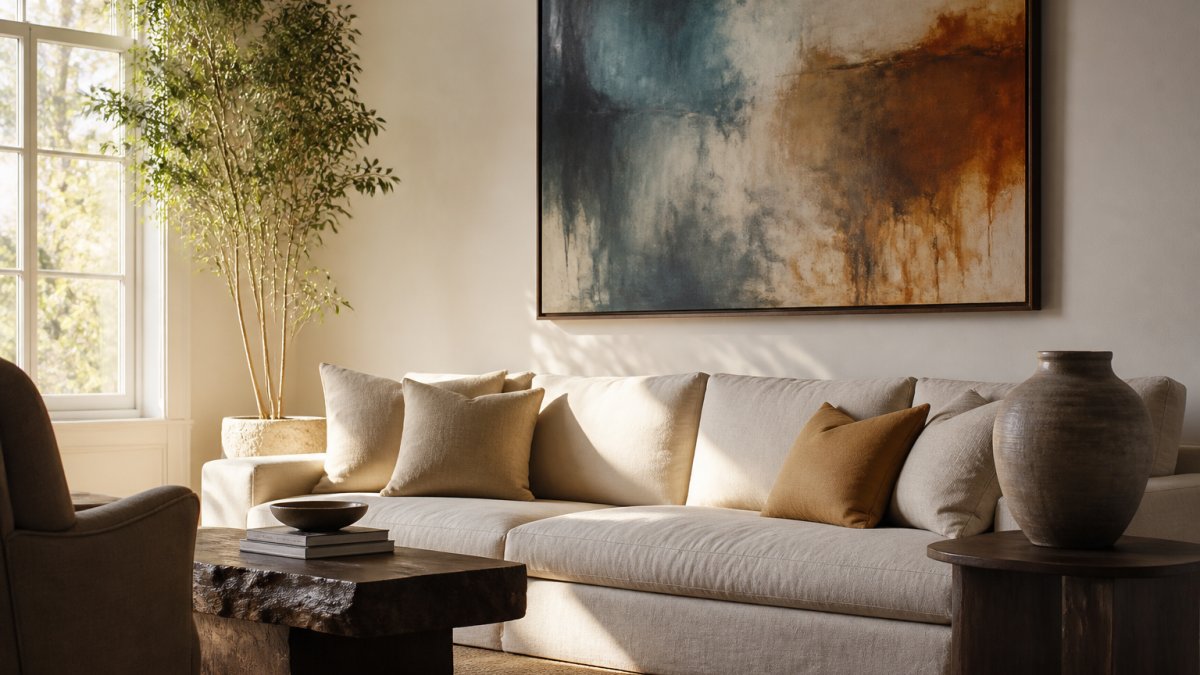
A curated piece is chosen for your actual wall, not a generic buyer. That means correct scale, palette, and framing for the room it will live in. The result is a space that looks intentional, because it is.
Emotional Connection and Personal Enjoyment
Curation starts with your taste, not a trend list. When a curator asks what you respond to before showing you anything, the artwork you end up with tends to be one you still love years later. That emotional connection is the point.
Quality of Life and Daily Inspiration
Living with original art changes a room's daily character. Owners consistently describe a kind of quiet introspection and inspiration from passing a piece they chose deliberately. It is a small, repeatable pleasure rather than a one-time purchase thrill.
Supporting Artists and Creative Communities
Buying curated original art pays the artist directly and keeps their practice alive. Galleries that represent living artists route a meaningful share of each sale back to the maker, which sustains the creative communities collectors value.
How to Choose Art for Your Home: A Practical Checklist
Use this checklist before you commit to any piece. It is the same set of questions our curators run through with new buyers.
- Scale: Does the piece fit the wall, or will it crowd the furniture?
- Palette: Does it work with the room's existing colors and light?
- Provenance: Can the seller document the artist and origin?
- Condition: Are there any flaws, and are they disclosed?
- Preview: Can you see it in your space before buying?
- Returns: What happens if it arrives damaged or you change your mind?
- Total cost: Is framing, shipping, and insurance included or extra?
Art Collecting for Beginners: Where to Start
Start with one piece you love, not a strategy. Beginners who buy their first artwork on emotion and their second on criteria tend to build collections they actually keep.
A practical first-year sequence:
- Define a budget you are comfortable spending on a single piece.
- Pick one wall and note its light, size, and colors.
- Browse curated selections rather than open marketplaces.
- Ask the gallery how the artist was chosen and how the piece ships.
- Preview it in your space, then buy.
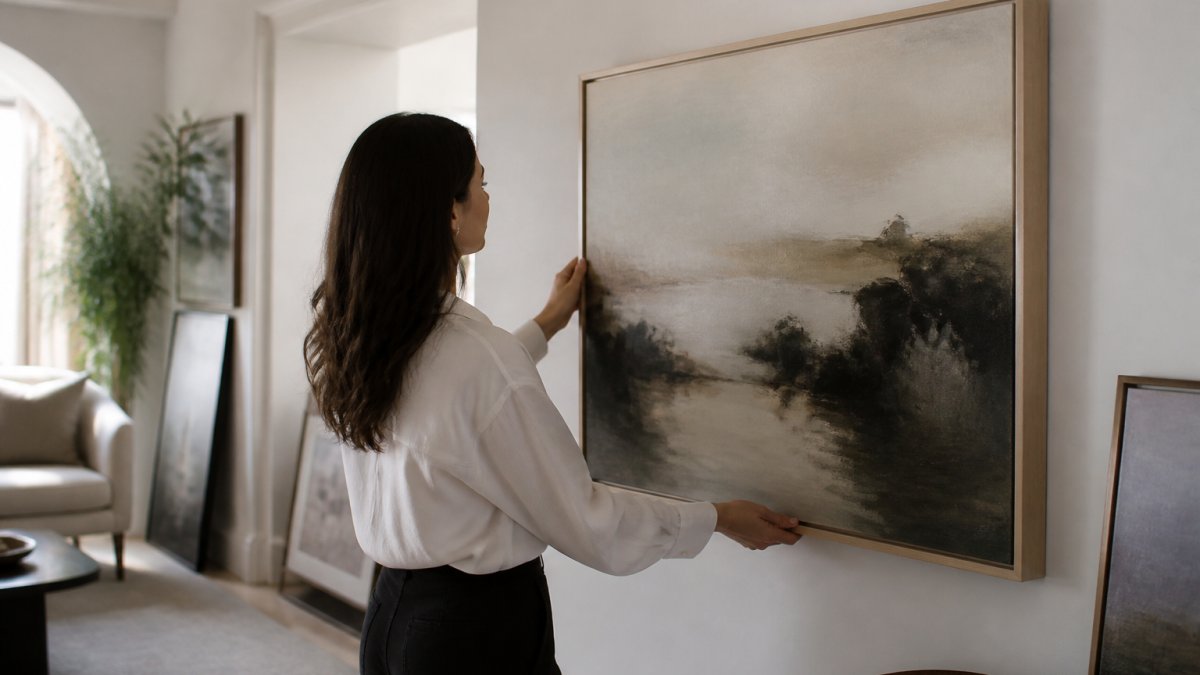
That last step is where online buying usually breaks down. Our augmented reality tool lets you place a piece on your own wall at true scale before checkout, which removes most of the "will it actually look like that" doubt.
Buying Art for Investment or Pleasure: Setting Realistic Expectations
Buy for pleasure first. Treat any investment value as a possible bonus, never the reason to buy. That advice is common, but it is incomplete without understanding how art markets actually work when you try to sell.
Art is an illiquid asset. Unlike stocks or bonds, there is no public exchange, no daily price, and no guaranteed buyer. Selling a piece typically requires one of four channels, each with different costs and timelines:
- Auction house: You consign the work, the house markets it, and it sells to the highest bidder. Seller's commissions commonly run in the range of 10-20% of the hammer price, plus possible photography, insurance, and shipping fees. If the piece does not meet its reserve, it goes unsold and you may still owe some costs.
- Gallery resale or consignment: The gallery takes a commission, often 40-50% on primary sales and sometimes less on secondary. The trade-off is reach and expertise versus a large share of the proceeds.
- Private sale: No commission, but you find the buyer, negotiate, handle payment, and manage shipping and authenticity documentation yourself. This can take months or years.
- Online resale platforms: Fees vary widely, and the buyer pool for any single artist is thin. Expect lower realized prices than a specialist channel.
Resale value depends on factors you cannot control. The artist's market momentum, the provenance of your specific piece, its condition, whether it is a primary or secondary market work, and whether the right buyer is active at the moment you sell all matter. A piece by an artist whose career cools can sit unsold for years. A piece by an artist whose career accelerates can appreciate quickly, but that outcome is not predictable at purchase.
Appreciation is not guaranteed, and past performance does not predict future results. Even established artists experience flat or declining markets. Emerging artists carry higher risk and higher potential variance. Treat any projection of future value as speculation, not planning.
Fees and carrying costs erode returns. If you insure the work, pay for climate-controlled storage, or frame it archivally, those costs accumulate. A piece that appreciates 15% over five years may net far less after commissions, insurance, and shipping.
If wealth management is your goal, talk to a financial advisor about how art fits alongside diversified assets, not whether it replaces them. Art can be part of a portfolio, but it is not a liquid one, and it should never be the only store of value you rely on.
Original Art vs. Prints: What Curated Buyers Should Know
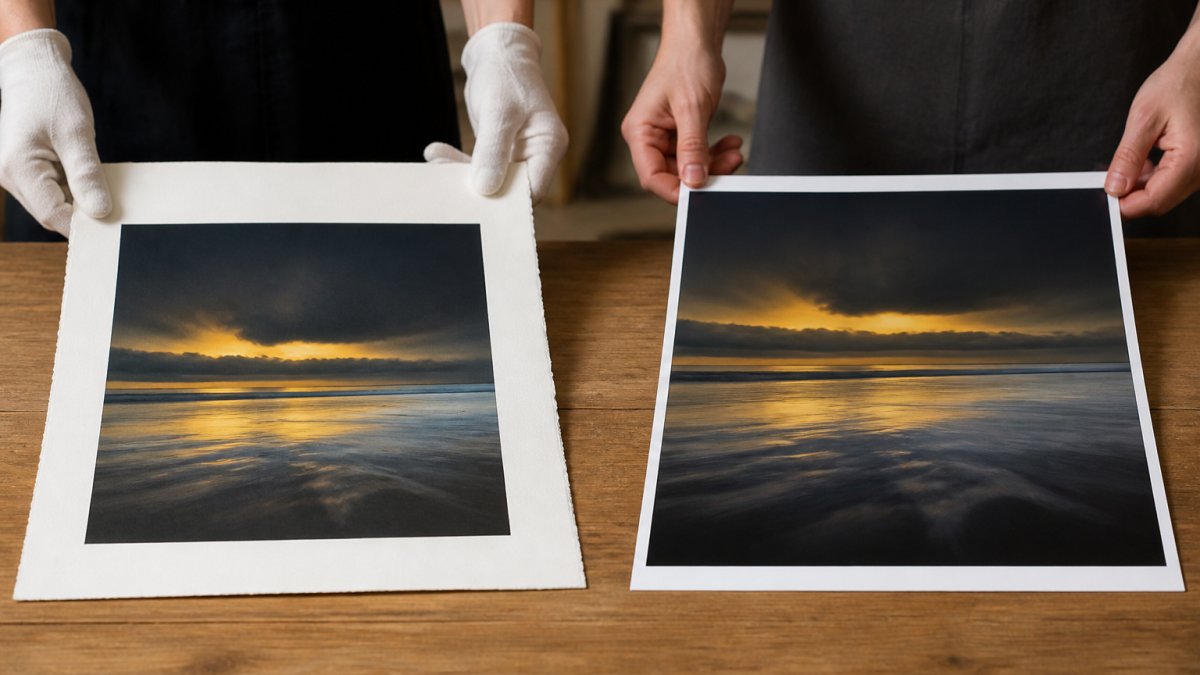
Original art is a one-of-a-kind work; prints and reproductions are copies, sometimes in limited editions. Both are legitimate, but they behave differently as purchases.
| Factor | Original Art | Limited Edition Prints | Open Reproductions |
|---|---|---|---|
| Uniqueness | One of one | Numbered, fixed run | Unlimited |
| Price level | Highest | Moderate | Lowest |
| Resale potential | Varies by artist | Modest | Minimal |
| Best for | Collectors, statement pieces | First-time buyers | Decoration on a budget |
If you want a piece with potential resale value, originals and low-edition prints are the realistic options. Reproductions are for the look, not the collection.
Transparent Pricing and Total Cost of Curated Art
Pricing for curated art depends on the artist, medium, size, and edition, so we quote each piece individually rather than publish a range. What we can promise is transparency about what you are paying for: the artwork, the artist's share, and any framing or shipping. This commitment to clarity ensures that every investment contributes to a cohesive aesthetic, as the intentional placement of curated decor transforms a simple room into a thoughtfully composed environment.
What drives the price of a curated piece:
- Artist reputation and market tier:
- Medium and materials: Oil on canvas, bronze sculpture, and archival pigment prints each carry different production costs and market expectations. Works on paper typically price below comparable canvases.
- Size: Larger works generally cost more, but not linearly. A very large piece may command a premium because fewer collectors can place it.
- Edition: A one-of-one original is priced higher than a limited edition print. A print from an edition of 10 prices higher than one from an edition of 200. Open reproductions are the least expensive.
- Provenance and exhibition history: A piece that has been shown in a museum or included in a notable collection may carry a premium.
The total cost of ownership goes beyond the sticker price. Ask any seller to itemize these before you buy:
- Artwork price, the negotiated or listed price of the piece itself.
- Framing and mounting, custom framing can run from a few hundred to several thousand dollars depending on size and materials. Museum-grade glass and archival matting cost more but protect the work.
- Shipping and insurance, crated shipping for a large original can cost hundreds of dollars domestically and more internationally. Insurance during transit is typically a small percentage of the declared value.
- Sales tax, applies where required by state and local law. Online purchases may or may not include it depending on the seller's nexus and the buyer's location.
- Installation, hanging a heavy or large piece may require professional art handlers, especially for sculpture or works over a certain weight.
- Ongoing costs, insurance riders on a homeowner's or renter's policy, climate control if the work is sensitive, and periodic conservation if needed.
- Resale costs, if you ever sell, expect commissions, shipping, and possibly authentication fees. These reduce your net proceeds.
How to compare curated options fairly:
- Request a written quote that separates artwork price from all ancillary costs.
- Ask whether framing is included or quoted separately, and whether it is archival.
- Confirm who pays shipping and insurance, and what happens if the piece arrives damaged.
- Ask about return windows and whether return shipping is your responsibility.
- If resale matters to you, ask the seller what secondary market channels exist for that artist and what commissions apply.
Miramontes Gallery keeps that checkout secure with SSL encryption and offers no-charge replacement or refund for quality issues, so the cost you see is the cost you pay. For any piece, we will provide an itemized quote on request so you can compare total cost, not just the headline price.
Frequently Asked Questions
What are the benefits of buying curated art?
Curated art offers expert selection, so you spend less time sorting through thousands of options and more time finding pieces that fit your taste and space. You also get transparent pricing, quality assurance, and access to original works from vetted artists. For first-time buyers, curation removes the intimidation factor and helps you build a collection with confidence. The result is art that improves your home's aesthetic, sparks conversation, and holds meaning for years.
How does curated art differ from buying art on your own?
When you buy on your own, you browse open marketplaces with mixed quality and little context about the artist or provenance. Curated art means a knowledgeable selector has already evaluated authenticity, condition, and artistic merit. You get guidance on how a piece fits your space and collection goals. Curation also typically includes clearer return policies and support if something arrives damaged or does not match expectations.
Is curated art a good choice for first-time buyers?
Yes. Curated art is especially helpful for beginners because it reduces the risk of overpaying or choosing something that does not suit your space. A curator can explain what makes a piece valuable, how to care for it, and whether it fits your budget and long-term collecting goals. You also benefit from tools like augmented reality previews, which let you see the work on your wall before you commit.
Can buying art improve the look and feel of a home?
Original art adds depth, color, and a focal point that mass-produced decor cannot match. A single well-chosen piece can anchor a room and make it feel intentional. Beyond aesthetics, living with art you love creates a daily emotional connection. The strongest benefit is the personal enjoyment you get from owning something meaningful.
Buying curated art still asks one hard question: how do you trust a piece you have not stood in front of? Miramontes Gallery answers it with augmented reality previews, a secure SSL-encrypted checkout, and a clear no-charge replacement policy for quality issues. Browse our curated collection, preview a piece on your own wall, and shop art with confidence.