 blog
blog
Authentic Fine Art vs Digital Prints: A Buyer's Guide
Table of Contents
- What Authentic Fine Art and Digital Prints Actually Are
- Production Methods: How They're Made and Why It Matters
- How to Authenticate a Painting and Verify Authenticity
- Quality, Longevity, and What Determines Value
- Buying Art Online Safely: What You Need to Know
- Pricing, Value, and Resale Considerations
- Making Your Decision: Which Is Right for You
- Frequently Asked Questions
Last Updated: October 12, 2026
What Authentic Fine Art and Digital Prints Actually Are
When buying art, the first question isn't price or style, it's what you're actually purchasing. Authentic fine art vs digital prints represent fundamentally different things: one is a physical object created by hand or traditional methods, the other a reproduction made from a digital file.
At Miramontes Gallery, we help collectors navigate this exact issue. The confusion costs buyers thousands every year: some purchase digital prints thinking they own original artwork, while others overpay for reproductions when a high-quality digital print would serve them perfectly.
Original Print Meaning in Art
An original print is a work created by the artist's hand using traditional printmaking techniques, lithographs, etchings, woodcuts, screen prints, and relief prints. The artist creates the image directly on a printing surface, then produces limited copies from it.
The key distinction: the artist physically made the printing plate. If an artist creates 100 lithographs, all 100 are originals, but once the edition closes, no more can be made from that plate.
Digital Prints Defined
Digital prints are reproductions created from a digital file. The artist or photographer captures an image digitally, then uses printing technology, commonly inkjet or giclée printing with pigment ink, to transfer it onto paper, canvas, or other materials.
Digital prints aren't limited by edition size: the artist can print as many copies as they want, whenever they want. That accessibility makes them affordable, but it also means they lack the scarcity that drives value in original artwork.
Production Methods: How They're Made and Why It Matters
The way art is made directly affects its quality, longevity, and price. Here's where authentic fine art vs digital prints diverge most sharply. Traditional printmaking requires skill, specialized equipment, and physical materials. Digital printing is faster and more flexible but uses different technology entirely.
Traditional Fine Art and Printmaking Techniques
Traditional printmaking means creating an image on a surface, then pressing that surface against paper to transfer ink. The main methods:
- Lithography: The artist draws on a stone or metal plate with a greasy crayon. Oil-based ink adheres to the greasy areas. Paper pressed against the plate picks up the image. Each print is a true original because the artist controlled every mark.
- Etching: The artist scratches lines into a metal plate and fills them with ink. The raised surface is wiped clean, leaving ink only in the scratched lines, which creates fine detail and sharp contrast.
- Woodcut and relief printing: The artist carves away parts of a wooden block, leaving raised areas. Ink is rolled onto the raised surface and paper is pressed against it, producing a bold, graphic, distinctly handmade result.
Each technique requires the artist's direct participation, and mistakes can't be undone. That irreplaceable physical act of creation is why original prints from established artists command premium prices.
Digital Printing and Giclée Print vs Original Artwork
Giclée printing is a type of digital printing that uses fine inkjet technology to reproduce artwork onto fine art paper.
The process: scan or photograph the original artwork, optimize the digital file, and print it with pigment ink.
The key difference from original printmaking: no physical plate is created by the artist. The digital file is the master, so any number of copies can be printed.
How to Authenticate a Painting and Verify Authenticity
Buying art online means you can't examine it in person, which creates risk: forged artwork, misrepresented reproductions, and counterfeit certificates flood the market. Knowing how to spot authentic work protects your investment.
Key Authentication Markers
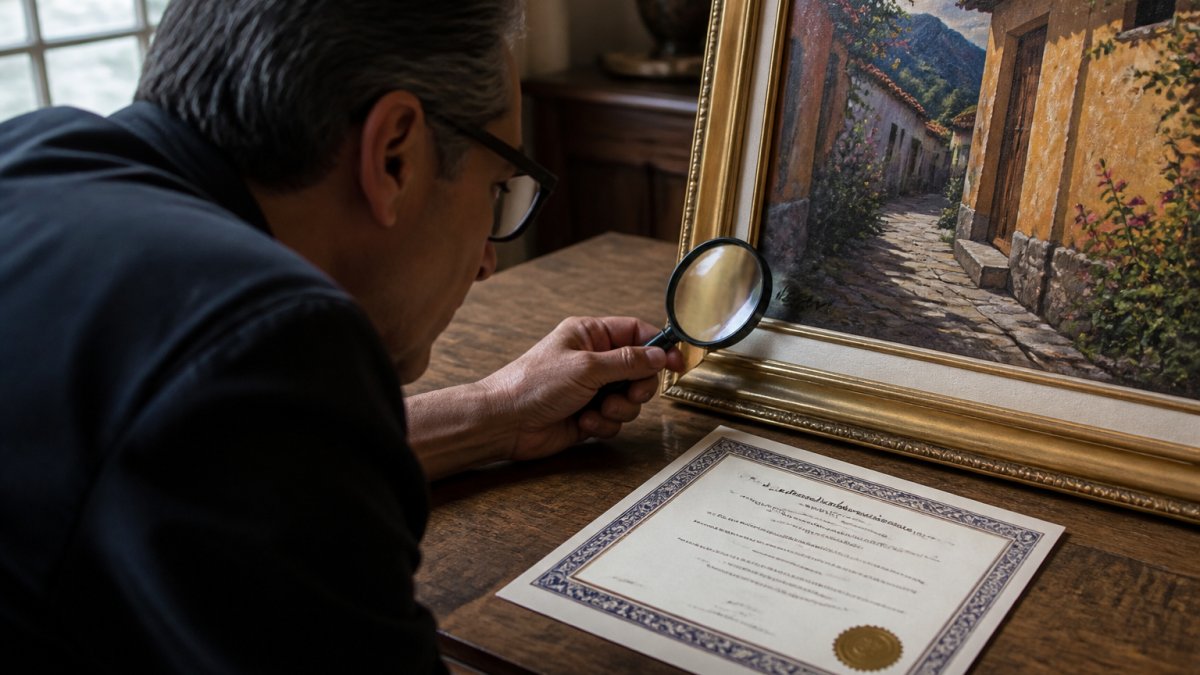
Authentic artwork displays markers that reproductions lack. What to check:
- Signature and placement: The signature should match the artist's known style and typical placement, artists usually sign in the same location on their work. Research the signature online to verify.
- Certificate of authenticity: Legitimate fine art comes with documentation from the artist, gallery, or auction house listing the artist's name, title, date, edition number (if applicable), and issuer contact information. Vague or generic certificates are red flags.
- Materials and surface texture: Original prints have tactile texture from the printing process. Digital prints on fine art paper feel slightly textured too, but uniformly so. Reproductions on glossy paper feel smooth and plastic-like.
Red Flags and What to Avoid
Warning signs of counterfeit or misrepresented artwork:
- No certificate of authenticity: Legitimate fine art always includes documentation. If the seller can't provide one, walk away.
- Suspiciously low prices: Original artwork from established artists costs money. A piece priced far below market rate is likely a reproduction sold as original.
- Vague seller information: Legitimate galleries provide clear contact information, return policies, and artist credentials. Sellers hiding behind anonymous websites or unclear business names are risky.
At Miramontes Gallery, we verify every piece in our collection. Our SSL-encrypted checkout and clear return policy mean you can buy with confidence. If something arrives damaged or doesn't match the description, we replace it at no charge.
Quality, Longevity, and What Determines Value
Not all artwork lasts or holds value. Materials, printing method, and care all affect how long your art survives and what it's worth in 10 or 20 years.
Archival Quality and Print Longevity
Archival quality means materials designed to resist fading and deterioration for 100+ years, for both original and digital prints.
For original prints, archival quality depends on:
- Paper: Acid-free paper resists yellowing and brittleness; cotton-based papers outlast wood-pulp papers (The Deterioration and Preservation of Paper: Some Essential Facts - Collections Care).
- Ink: Pigment-based inks resist fading better than dye-based inks. Lightfastness ratings measure how long ink resists fading under light.
- Storage conditions: Temperature, humidity, and light exposure affect longevity. Stable, cool, dry conditions preserve artwork best.
For digital prints, the same principles apply. Giclée prints on acid-free, cotton-based fine art paper with pigment ink can last 100+ years.
Archival materials cost only $10-30 more per print, but they determine whether your artwork looks fresh in 20 years or faded and yellowed.
Color Accuracy, Detail, and Image Quality
When buying art online, you can't see the actual colors or fine details until it arrives. This is where authentic fine art vs digital prints creates real concerns.
Color accuracy depends on:
- Color management: Professional printers use calibrated monitors and color profiles so prints match the original. Cheap sellers skip this step.
- Ink quality: Pigment inks produce richer, more accurate color than dye-based inks, the reason giclée printers use them.
- Paper choice: Matte paper absorbs ink differently than glossy, affecting how colors appear. Fine art paper shows color accurately without gloss or sheen.
Detail and resolution matter for intricate artwork.
Miramontes Gallery uses augmented reality technology to help you visualize artwork in your space before purchase. You can see actual colors and how the piece looks on your wall.
Buying Art Online Safely: What You Need to Know
Online art purchases carry real risk: you're sending money to someone you don't know for a product you can't inspect. Protect yourself by knowing what to check before you buy.
Verification and Seller Credibility
Before purchasing, verify the seller:
- Business registration: Check whether the seller is registered with business authorities; legitimate galleries often hold industry memberships. Miramontes Gallery is registered with the Art Storefronts Organization, which verifies member credibility and business practices.
- SSL encryption: Look for "https://" and a padlock icon in your browser, which ensures your credit card data is secure.
- Contact information: Real galleries provide phone numbers, email addresses, and physical locations. Sellers hiding contact details are risky.
Return Policies and Guarantees
Your return policy is your safety net. Before buying, confirm:
- Damage coverage: If artwork arrives damaged, can you get a replacement or refund, and how long do you have to report it?
- Condition guarantees: Does the seller guarantee the artwork matches the description? What happens if colors look different in person?
- Refund timeline: How long does the refund take, and do you get money back or store credit?
- Shipping costs: Who pays for return shipping, the seller or you?
At Miramontes Gallery, we offer no-charge replacements for quality issues. If your artwork arrives damaged or doesn't meet your expectations, we replace it at no cost to you. Our secure checkout protects your payment information, and our clear return policy means you're covered.
Pricing, Value, and Resale Considerations
Price reflects artist reputation, edition size, materials, and market demand. Understanding what drives it helps you buy smart.
Original prints from established artists command higher prices because:
- Scarcity: Limited editions mean fewer pieces exist. Scarcity drives value.
- Artist reputation: Well-known artists' work sells for more than unknown artists.
- Technique skill: Complex techniques like etching require expertise, justifying higher prices.
- Provenance: Work with documented history and exhibition records is worth more.
Digital prints cost less because they're reproductions, but a high-quality giclée print on fine art paper from an emerging artist can be a smart buy, beautiful artwork at an affordable price.
Resale value differs dramatically. Original prints from established artists often appreciate, buy at $500, sell at $800 years later.
Consider your intent: investment or decoration? Investment-grade art requires authentication, provenance, and artist reputation; decorative art prioritizes looks and budget.
Making Your Decision: Which Is Right for You
Choosing between authentic fine art vs digital prints depends on your budget, goals, and preferences.
Choose authentic fine art if:
- You're investing in art and want potential appreciation
- You value one-of-a-kind or limited-edition work
- You want to support established artists
- You're building a serious collection
Choose digital prints if:
- You want beautiful artwork at affordable prices
- You're decorating your home or office
- You prefer contemporary or photography-based art
- You want flexibility in sizing and framing
Both can be high-quality and last decades. The difference is authenticity, scarcity, and investment potential, so know what you're buying and why.
Frequently Asked Questions
What does original print mean in art?
An original print is a work created by an artist specifically for printmaking, where each impression is considered an original artwork. Unlike reproductions, original prints are made in limited quantities with artist oversight. The artist signs and numbers each print, and the edition size (total number produced) is declared. Original prints hold value and collector interest because they represent the artist's direct creative intent for that medium, whether created through traditional printmaking or digital methods.
How can I tell if a painting is an original or a print?
Check for a signature and edition number, typically on the lower margin. Original paintings show brushstrokes, texture, and paint thickness visible up close. Prints have uniform surface texture and no dimensional paint buildup. Look for a certificate of authenticity, which documents edition size and production method. Examine the back for artist stamps or gallery labels. Request provenance documentation showing the artwork's ownership history. Authentic fine art prints come with clear labeling of the production process (giclée, lithograph, etc.) and archival materials. When buying online, verify the seller's credentials and return policy.
Is a fine art print an original work of art?
Yes, a fine art print can be an original work of art when the artist created it specifically for print production. Limited edition prints signed and numbered by the artist are considered originals in the art world. However, reproductions of existing paintings are not originals, even if printed on quality materials. The distinction depends on the artist's intent and the edition's documentation. Fine art prints hold genuine value, especially when produced using archival methods like giclée printing with pigment inks on acid-free paper. Always verify the production method and whether the print is part of a limited edition.
What should I check before buying art online?
Verify the seller's credentials, including business registration and memberships with recognized art organizations. Review their return policy and guarantee for quality issues or damage in transit. Request a certificate of authenticity and detailed production information. Check product photography and use augmented reality tools if available to visualize the piece in your space. Confirm the materials used (paper type, ink quality, archival standards). Read customer reviews and ask about their replacement process for damaged items. Ensure the website uses SSL encryption for secure checkout. Never purchase without clear documentation of edition size, artist signature, and production method.
Buying art online shouldn't feel risky. At Miramontes Gallery, we've built a platform that removes the guesswork. Our augmented reality tool lets you visualize artwork in your space before purchase. Our SSL-encrypted checkout protects your payment information. And our no-charge replacement policy means you're covered if anything goes wrong. Shop Art with confidence and find the piece that speaks to you.