 blog
blog
Best Online Galleries for Collectors: 2026 Guide
Table of Contents
- What Collectors Should Look For in Online Galleries
- How to Buy Art Online Safely
- Best Websites to Buy Original Art Online
- Online Galleries for Photography
- What an Online Art Gallery Return Policy Should Cover
- Resale, Valuation, and the Collector Market
- Conclusion
- Frequently Asked Questions
Last Updated: October 14, 2026
What Collectors Should Look For in Online Galleries
The best online galleries for collectors share four traits: verified artists, transparent provenance, clear return terms, and secure checkout.
An online art gallery is a digital platform that represents artists and sells their work directly to buyers, usually with documentation, shipping, and returns handled by the gallery rather than the artist.
Due Diligence and Authenticity Checks
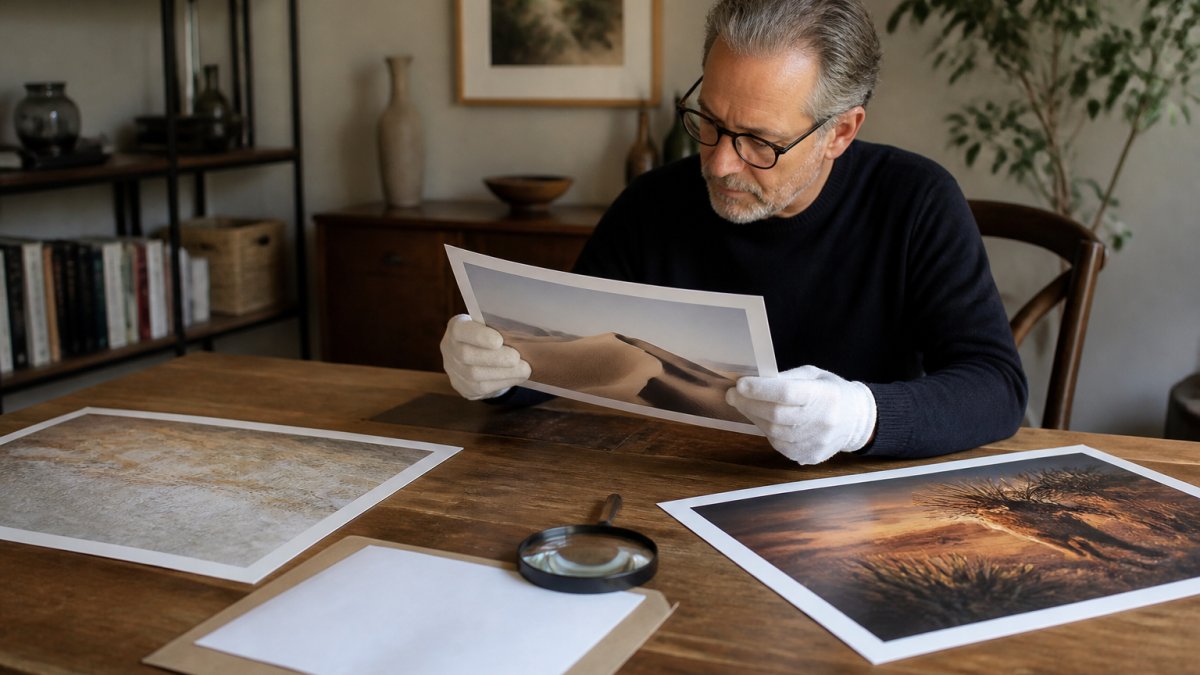
Authenticity is the first thing to verify. A legitimate gallery provides a certificate of authenticity, an artist biography, and a condition report for every piece. If a listing has none of those, walk away.
Ask three questions before you buy:
- Who is the artist, and where is their portfolio?
- Is this an original work or a reproduction?
- What documentation ships with the piece?
A common mistake is treating a low price as a bargain. Reproductions and unauthorized prints circulate widely, and a missing certificate is the clearest warning sign.
Total Cost of Ownership: Shipping, Duties, and Framing
The listed price is rarely the final price. Shipping, customs duties on international orders, and framing add up fast.
For large canvases, crated freight shipping can cost more than a small print's entire purchase price. Framing a non-standard size often requires a custom job. International shipping may trigger customs duties that the buyer pays on delivery.
Factor all of it into your budget before you commit. A gallery that quotes shipping upfront and states clearly who pays duties is easier to trust than one that stays vague.
How to Buy Art Online Safely
Buying art online safely comes down to verifying the seller, reading the return policy, and paying through a secure checkout. Skip any one of those and you carry the risk yourself.
Start with the seller. Look for an established track record, a physical or registered business presence, and membership in a recognized trade organization.
Then read the fine print. A strong online art gallery return policy states the window, the condition requirements, and who covers return shipping.
Finally, check the payment layer. An SSL-encrypted checkout protects your card details in transit.
Best Websites to Buy Original Art Online
The best websites to buy original art online are not interchangeable.
Most platforms fall into one of four operating models.
Curated gallery platforms represent a limited roster of artists and act as the seller of record.
Open marketplaces host thousands of independent sellers under one checkout. Inventory is enormous and price comparison is easy, but vetting is uneven.
Artist-direct storefronts let you buy straight from the maker, often at a lower price because no gallery commission is built in.
Print-on-demand and reproduction sites sell open-edition reproductions, not original works.
How to Compare Them Like a Collector
Run every candidate platform through the same six checks before you enter payment details.
| Evaluation Criterion | What to Look For | Why It Matters |
|---|---|---|
| Curation standard | Named artists with published bios and exhibition history | Distinguishes a gallery from a listing board |
| Provenance disclosure | Ownership history, prior sales, or studio-direct statement | Supports future resale and insurance |
| Price transparency | Listed price, stated shipping, stated duty responsibility | Prevents surprise cost at delivery |
| Buyer protection | Written return window, condition terms, defect remedy | Determines who absorbs a loss |
| Documentation | Certificate of authenticity, condition report, invoice | The paperwork that carries value forward |
| Specialist access | Human advice, virtual viewing, or preview tools | Matters most for first-time and remote buyers |
A platform that scores well on curation but hides shipping cost is still a risk. A platform with weak curation but strong buyer protection is a reasonable place to browse. The point is to score them consistently rather than defaulting to whichever site has the prettiest homepage.
Price Transparency and the Real Checkout Number
The listed price is a starting point, not the total. Ask each platform three questions before you commit: Is shipping quoted before checkout or added after? Who pays customs duties on a cross-border shipment? Is the frame included or quoted separately?
A gallery that answers all three in writing is easier to trust than one that leaves them to the fine print. For large canvases, crated freight can exceed the cost of a small print outright, and custom framing for a non-standard size is a separate line item again.
Accessibility and Service Quality
Collector suitability is not only about the artwork. Compare how each platform handles payment methods, whether it offers a virtual or augmented-reality preview, and whether a human answers questions before the sale rather than only after a dispute.
FTC guidance on online shopping and buyer rights explains the baseline protections that apply when a purchase goes wrong, though individual gallery terms still govern most art sales.
Online Galleries for Photography
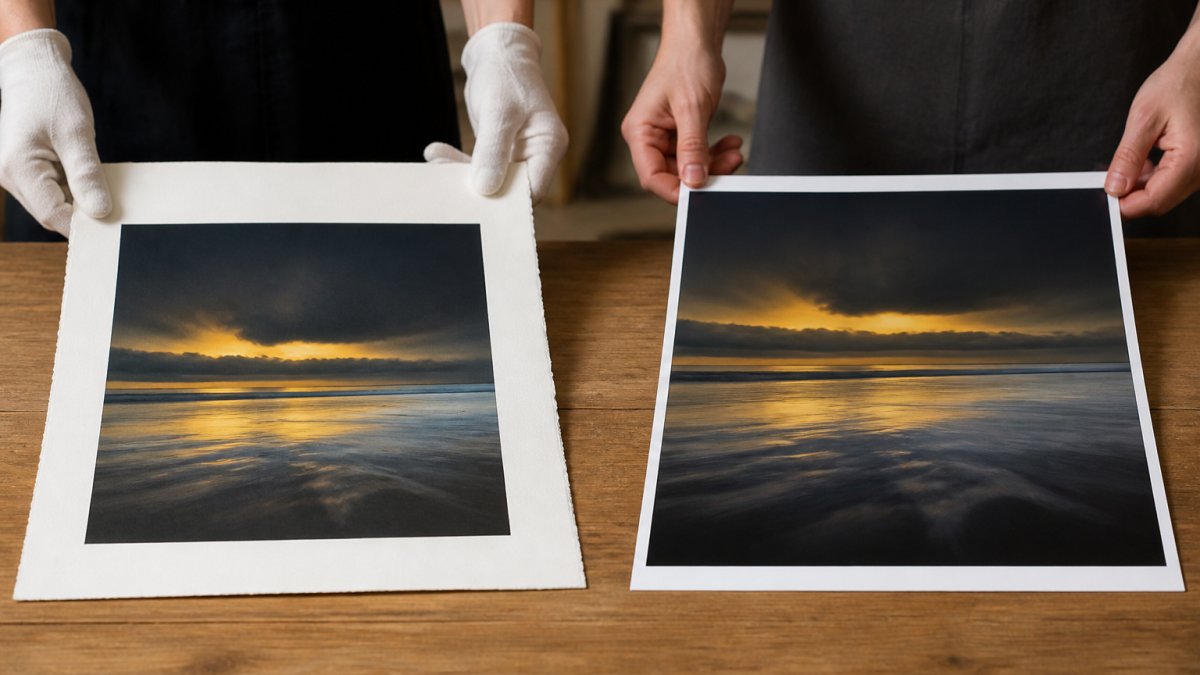
Online galleries for photography follow the same rules as painting galleries, with one addition: edition size. A photograph's value depends heavily on how many prints exist.
Fine art photography is typically sold in limited editions. Each print is numbered, and the edition size is documented. An edition of 10 behaves very differently in the collector market than an open edition reprinted indefinitely.
Look for these details on any photography listing:
- Edition size and the specific number of your print
- Print dimensions and the paper or medium used
- Whether the print is signed and whether it ships framed
- A certificate of authenticity naming the edition
Miramontes Gallery carries fine art photography alongside painting, and every listing states the edition details upfront. That transparency is what separates a collector-grade platform from a print-on-demand shop.
What an Online Art Gallery Return Policy Should Cover
A complete online art gallery return policy covers four things: the return window, the condition requirement, who pays return shipping, and how quality defects are handled.
The return window should be stated in days and start from delivery, not purchase.
Quality defects deserve separate treatment from change-of-mind returns. A damaged or defective piece is the seller's problem, not yours.
Consumer protection guidance on returns and refunds outlines the general rights buyers hold, though individual gallery terms still govern most art sales.
Resale, Valuation, and the Collector Market
Resale value depends on the artist's trajectory, the work's provenance, and the strength of its documentation. None of that is guaranteed at purchase, and no honest gallery will promise it. What a collector can do is understand the mechanics well enough to set realistic expectations.
Provenance Is the Asset
Provenance is the documented history of ownership, from the artist's studio, through each sale, to you. A clean, unbroken chain supports value later; a gap in the chain invites questions. Certificates of authenticity, original invoices, condition reports, and exhibition records all feed that chain. Keep every document that ships with a purchase, and store it somewhere you can retrieve it years later. Collectors who maintain complete records have a far easier time when they eventually sell or insure a piece.
How Valuation Actually Works
Valuation follows the market, not the seller's opinion. The clearest public signal is auction results for comparable works by the same artist, same medium, similar size, similar period. But auction results reflect past sales under specific conditions, and they are not a forecast.
For living artists, primary-market prices set by the gallery and secondary-market prices achieved at auction can diverge sharply. A work that sells quickly at retail may sit unsold at auction, and vice versa. Treat any projection of appreciation as an opinion, not a promise.
Liquidity: The Question Most Buyers Skip
Liquidity is how quickly and reliably a work can be converted to cash. It varies enormously by artist, medium, and price band. Widely exhibited artists with an active secondary market are more liquid than emerging artists with a thin sales record.
Before buying with resale in mind, ask: Is there an active market for this artist's work? Are there recent comparable sales? Who would the next buyer plausibly be? If you cannot answer those questions, buy the work because you want to live with it.
Resale Channels and Their Trade-offs
When you do sell, the channel affects both the price and the effort.
- Auction houses reach the widest pool of buyers but charge seller's commissions and may reject works below a value threshold.
- Galleries and dealers can place a work with a known client base, usually on consignment, and take a commission.
- Online resale platforms offer convenience and lower fees but attract price-sensitive buyers and provide little marketing for the work.
- Private sale avoids commissions but limits the buyer pool to your own network.
Each channel trades reach against cost and control. There is no universally best route; the right one depends on the artist, the price band, and how quickly you need to sell.
Edition Size and Its Effect on Value
For photography and prints, edition size is a primary driver of scarcity. A numbered print from an edition of 10 behaves very differently in the collector market than an open edition reprinted indefinitely. Smaller editions are scarcer, but they also narrow the buyer pool. Open editions are widely available and rarely appreciate. The specific number of your print, early in the edition versus late, can matter to some buyers, though the effect is inconsistent.
What You Can Control
You cannot control the artist's career or the market's mood. You can control the paperwork, the condition of the work, and the price you paid relative to comparable sales. Those three factors determine how well you are positioned if you ever decide to sell. Buy with documentation, store it carefully, and treat any appreciation as a possibility rather than a plan.
Conclusion
The gap between a safe purchase and an expensive mistake usually comes down to documentation, return terms, and where you click to pay. Miramontes Gallery handles all three with a secure, SSL-encrypted checkout, no-charge replacement or refund for quality issues, and an augmented reality tool that lets you preview a piece on your own wall before you buy. If you are ready to add something meaningful to your collection, browse our current selection and see how a piece looks in your space before it ships.
Frequently Asked Questions
What should collectors look for when buying art online?
Start with provenance and a certificate of authenticity, then check the gallery's return policy and buyer protection. Look for high-resolution images, artwork dimensions, medium, edition size, and framing options. A secure checkout with SSL encryption matters too. Before buying, confirm the gallery's track record and whether it belongs to a recognized organization like the Art Storefronts Organization. These checks separate a trustworthy online gallery from a risky one.
How can you tell if an online art gallery is trustworthy?
A trustworthy online gallery publishes clear artist biographies, provenance details, and a written return policy. It uses SSL-encrypted checkout, shows customer reviews, and has an established track record. You can also verify membership in industry organizations. If a site hides its return terms or cannot explain where a piece came from, treat that as a warning sign. When in doubt, ask the gallery directly before you buy.
Can you buy authentic original art online?
Yes, but you need to do your due diligence. Buy from galleries that provide a certificate of authenticity, a condition report, and documented provenance. Original artwork and limited edition prints should come with edition size and signature details. Avoid listings that use only low-resolution images or refuse to answer questions about the artist. A gallery registered with a recognized organization and offering secure payment gives you a safer path to authentic pieces.
What is a good return policy for an online art gallery?
A good online art gallery return policy gives you at least 30 days to return a piece and covers quality issues with no-charge replacement or refund. It should state who pays return shipping, how refunds are processed, and what condition the artwork must be in. For damaged deliveries, look for a clear claims process and a stated timeline. Always read the policy before checkout, because terms vary widely between galleries.